SHASHLIKPractical Guide
Fire Cooking Guide

Shashlik and Marinade Guide

A practical guide to shashlik marinades, preparation, skewering, heat control, and food safety for pork, beef, lamb, chicken, and turkey.

6 guide blocks
Practical Kitchen Guide

Methods, Marinades, and Key Decisions

Use these focused notes as a starting point, then open the related recipes for complete quantities and instructions.

01

Build a Balanced Marinade

Start with salt, aromatics, and enough moisture to coat the meat. Add acid with restraint because a strongly acidic marinade can soften the surface before the center takes on flavor. Oil is useful for lean cuts and helps distribute fat-soluble spices.
02

Onion and Herb Marinade

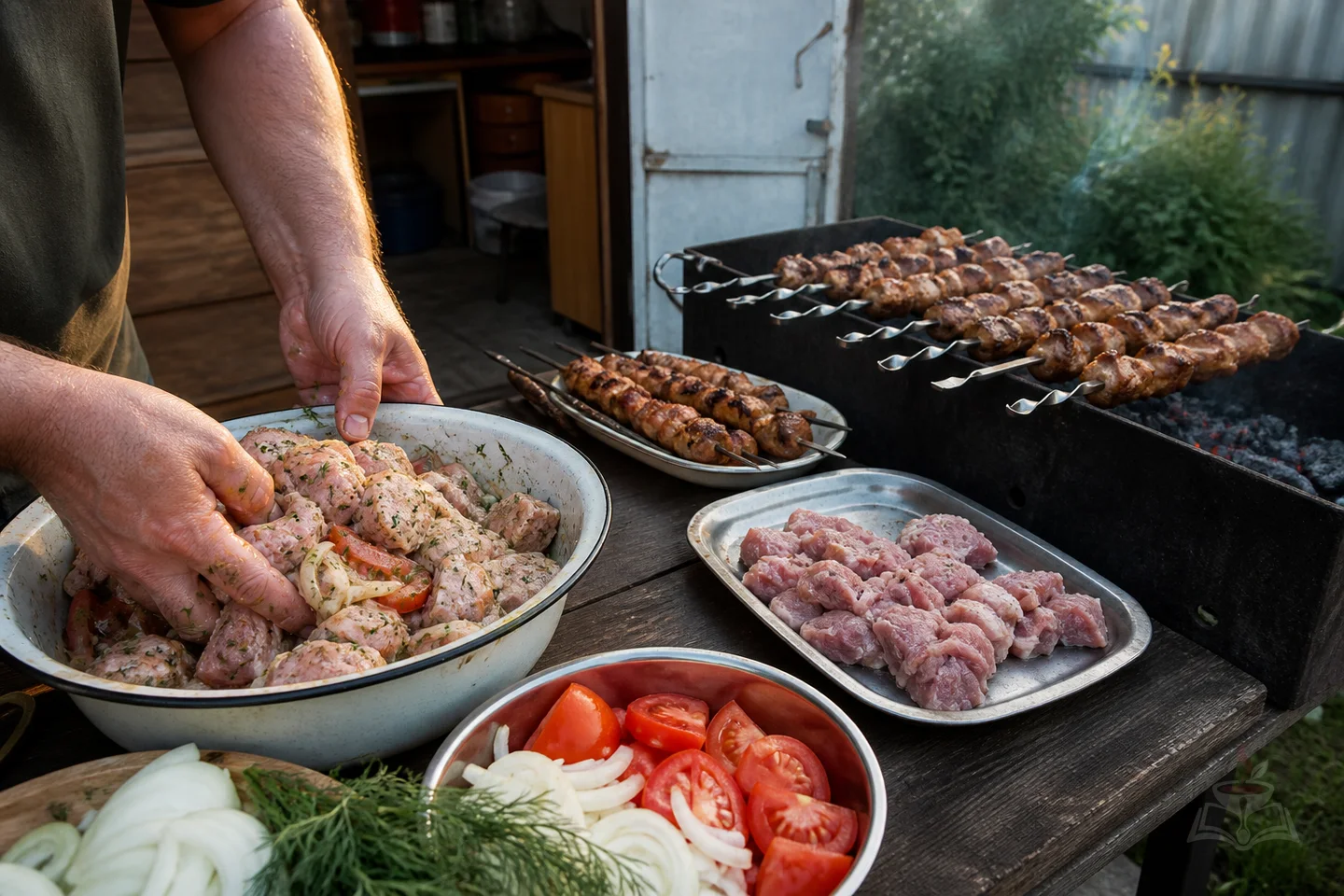
Grated or firmly crushed onion, salt, black pepper, and fresh herbs make a versatile shashlik base. Massage the mixture into evenly cut meat and refrigerate it in a covered non-reactive container.

03

Yogurt or Kefir Marinade

Cultured dairy creates a gentle tang and works especially well with chicken, turkey, and lamb. Combine it with garlic, paprika, coriander, or dill, and wipe away heavy excess before grilling so the surface browns instead of scorching.

04

Tomato, Paprika, and Spice Marinade

Tomato, sweet or smoked paprika, garlic, and a small amount of oil create a deeper savory coating. Keep added sugar modest because sweet marinades darken quickly over direct heat.

05

Skewering and Heat Control

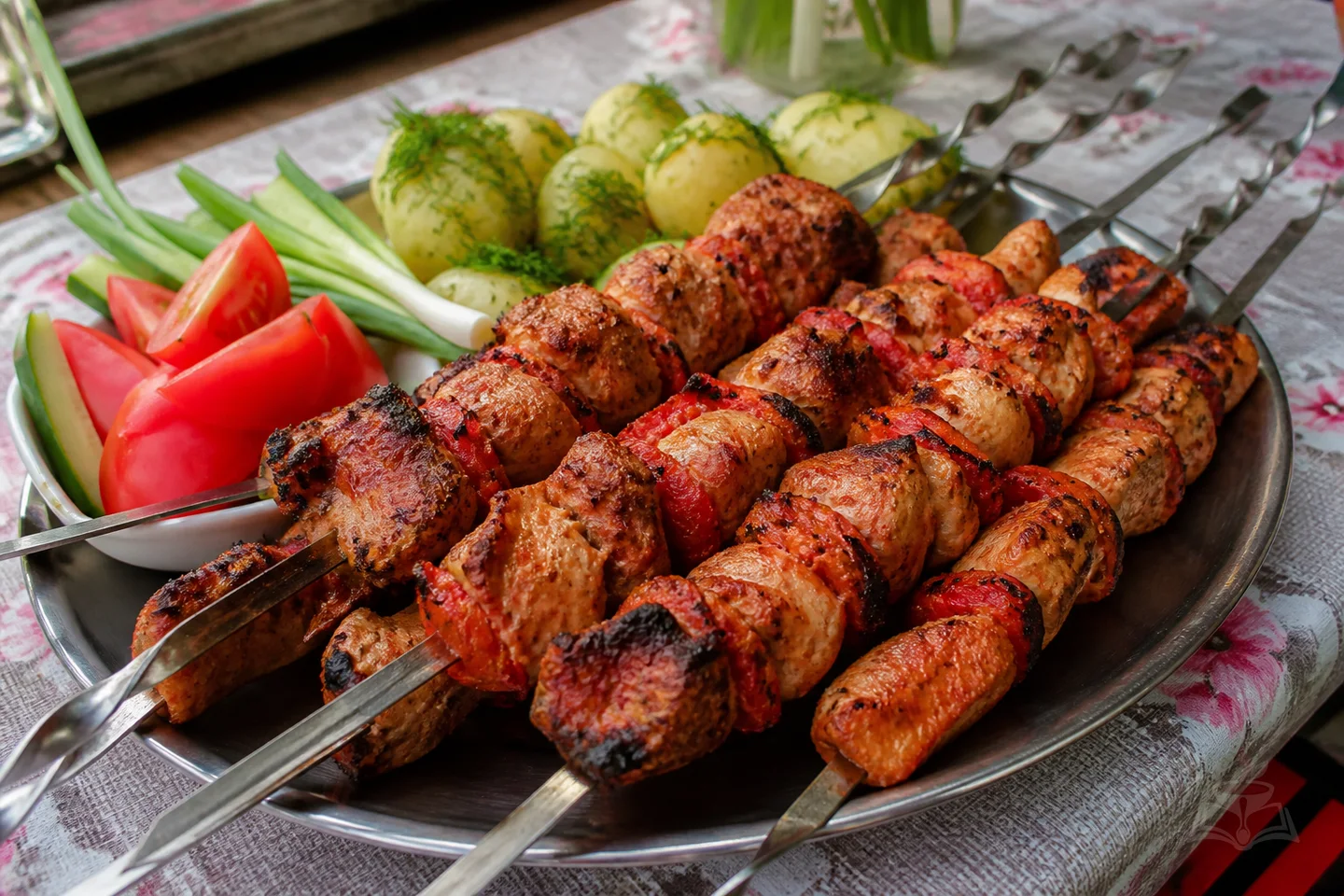
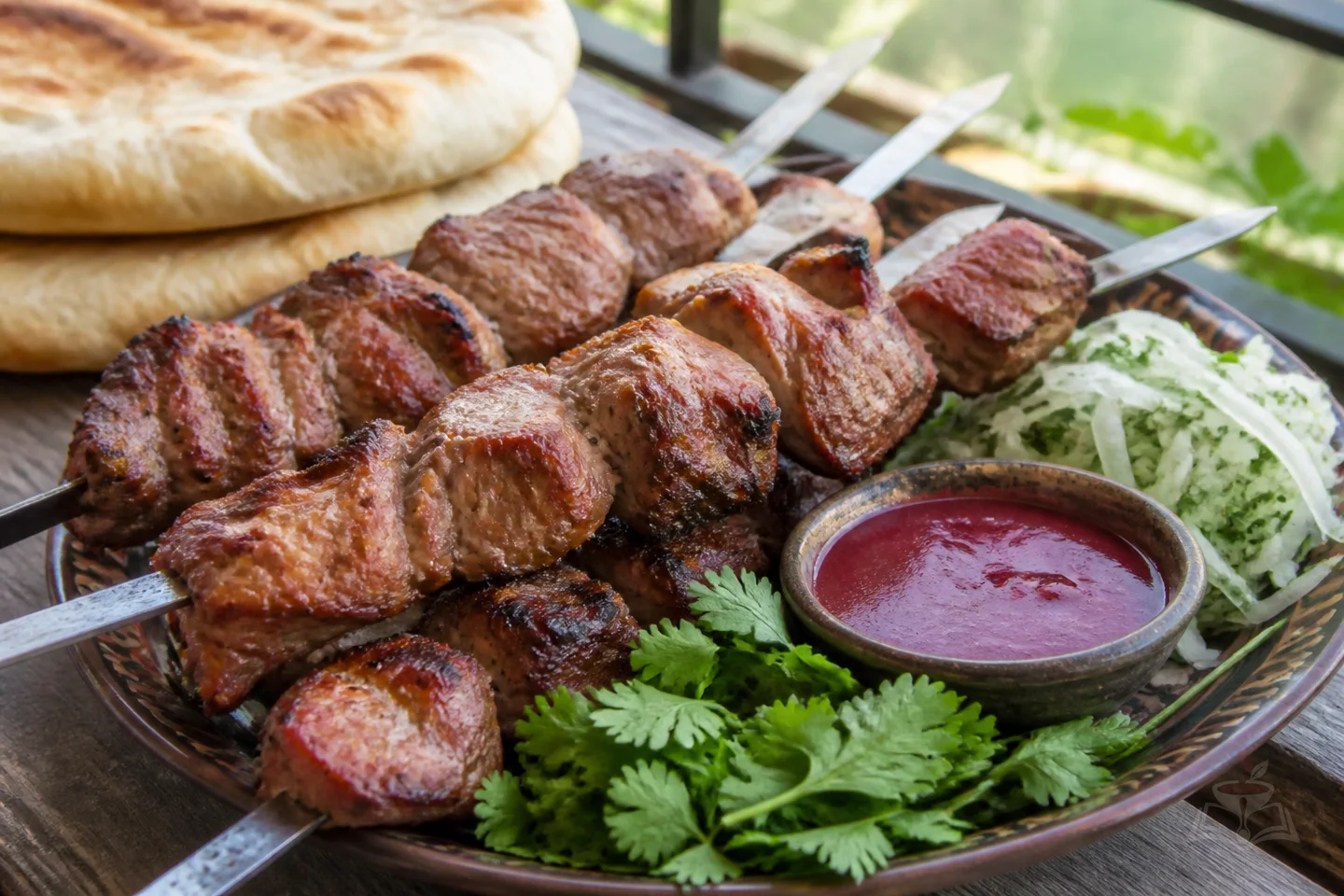
Cut pieces to a similar size, leave a little space between them, and avoid mixing ingredients with very different cooking times on one skewer. Cook over glowing coals rather than open flames, turning regularly for even browning.

06

Marinade and Temperature Safety

Marinate meat and poultry in the refrigerator. Reserve clean marinade before it touches raw food if you want a serving sauce; otherwise boil used marinade before reuse. Check doneness with a thermometer: whole cuts of beef, pork, lamb, and veal should reach at least 63 °C and rest for three minutes, ground meat 71 °C, and poultry 74 °C.