

Match the Method to the Cut
Tender cuts such as ribeye, strip, and tenderloin usually need simple seasoning and fast cooking. Flank, skirt, and similar cuts benefit from careful slicing across the grain and may take well to a savory marinade.
A focused steak guide for choosing a cut and matching it with the right high-heat or low-and-slow cooking method.
6 guide blocksUse these focused notes as a starting point, then open the related recipes for complete quantities and instructions.
Tender cuts such as ribeye, strip, and tenderloin usually need simple seasoning and fast cooking. Flank, skirt, and similar cuts benefit from careful slicing across the grain and may take well to a savory marinade.
Dry the surface thoroughly, season evenly, and preheat a heavy pan. Sear without crowding, turn when a strong crust forms, and add butter and aromatics near the end so they flavor the steak without burning.
Use a hot zone for browning and a cooler zone for controlled finishing. Keep the lid and vents working for you, move the steak when flare-ups become persistent, and judge progress with a thermometer instead of color alone.
For a thick steak, cook gently in a low oven until close to the target temperature, then finish quickly in a very hot pan or over direct heat. This method helps produce an even interior with a crisp exterior.
Salt and black pepper are often enough for a well-marbled tender steak. Use marinades to add flavor to leaner or more fibrous cuts, balancing salt, aromatics, a modest amount of acid, and oil without masking the beef.
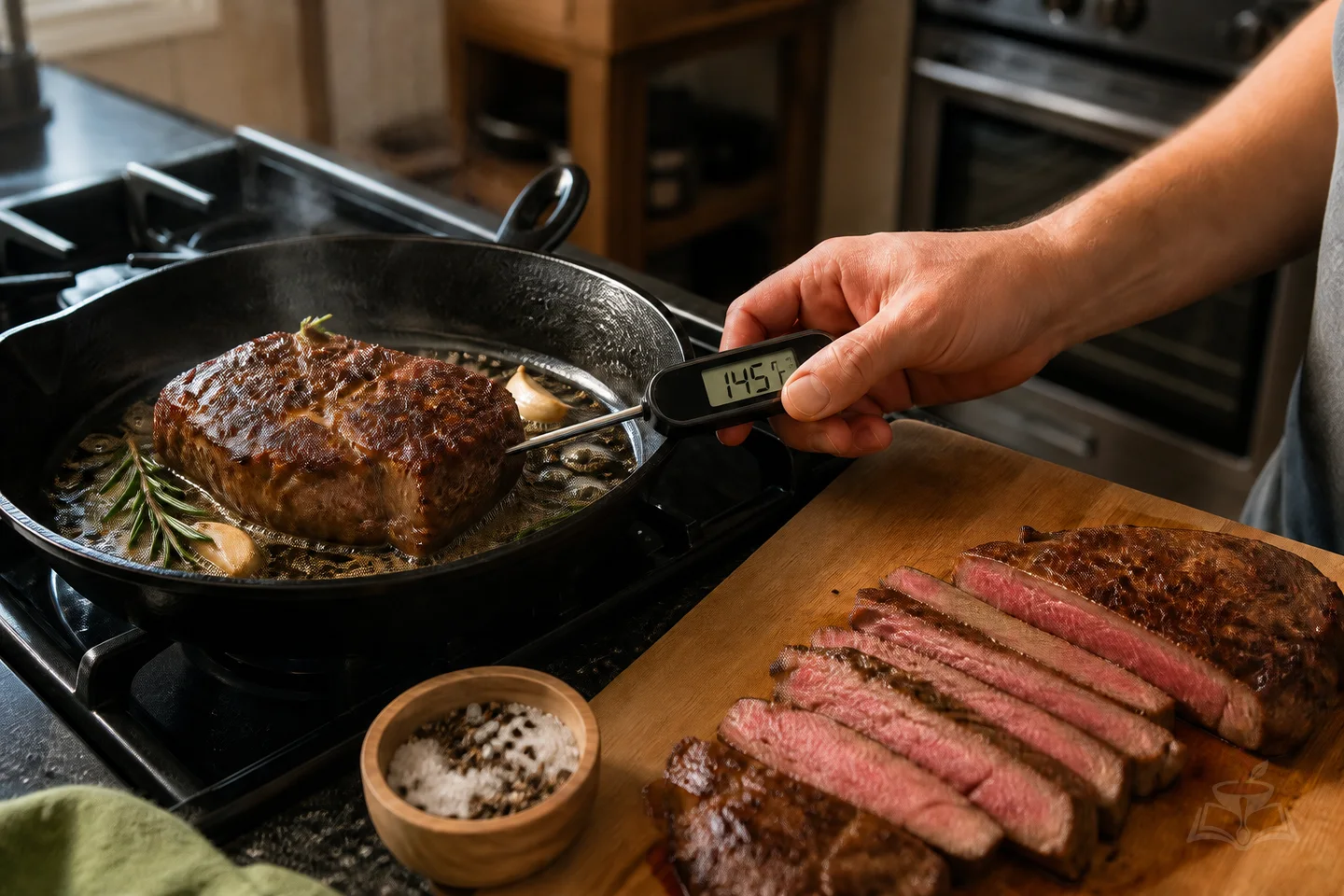
Use a food thermometer in the thickest part, away from bone and large pockets of fat. USDA guidance sets 63 °C with a three-minute rest as the safe minimum for whole beef steaks; ground beef should reach 71 °C. Rest before slicing so heat and juices redistribute.
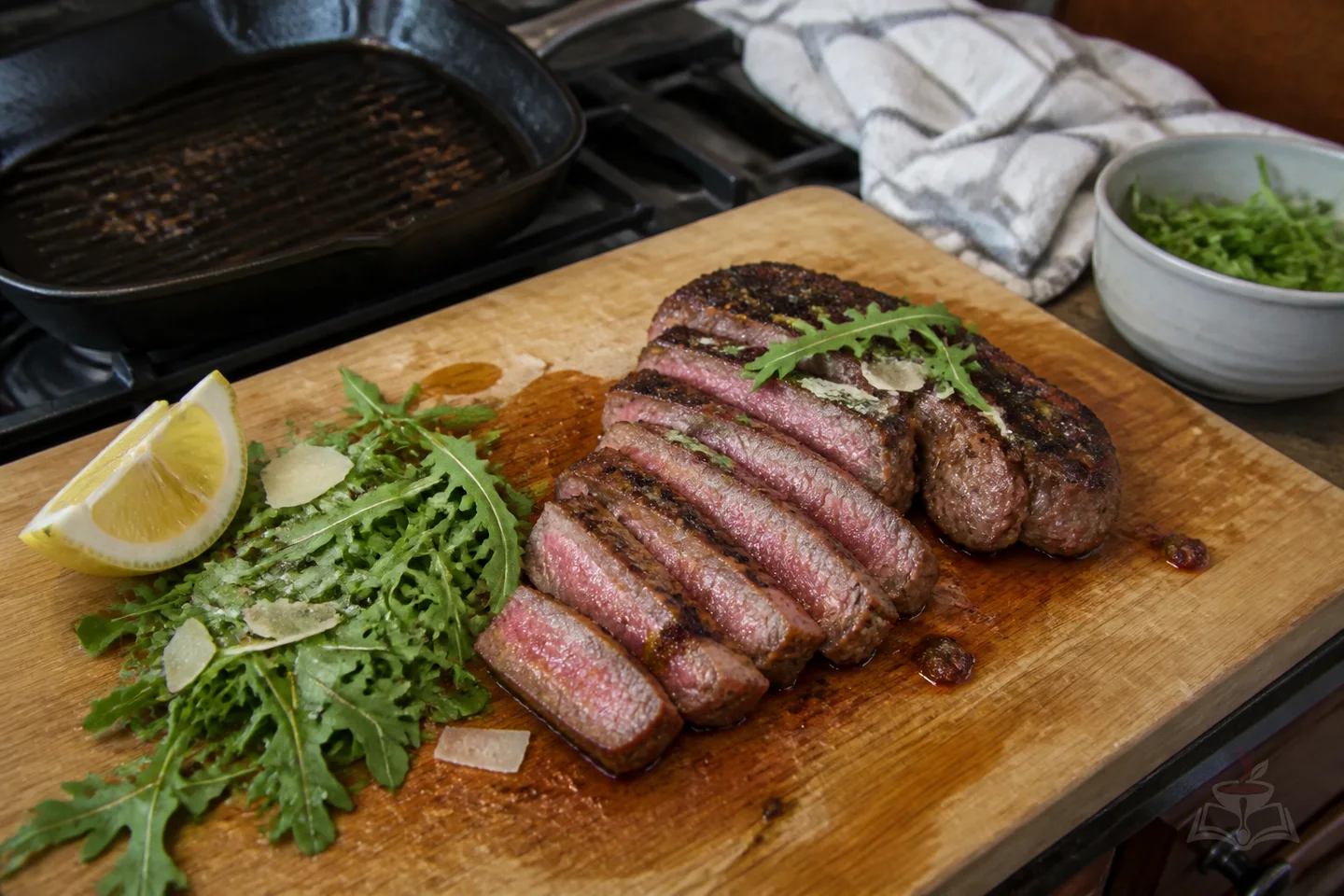
Grilled strip steak sliced over arugula with rosemary, lemon, olive oil, and shaved Parmigiano.
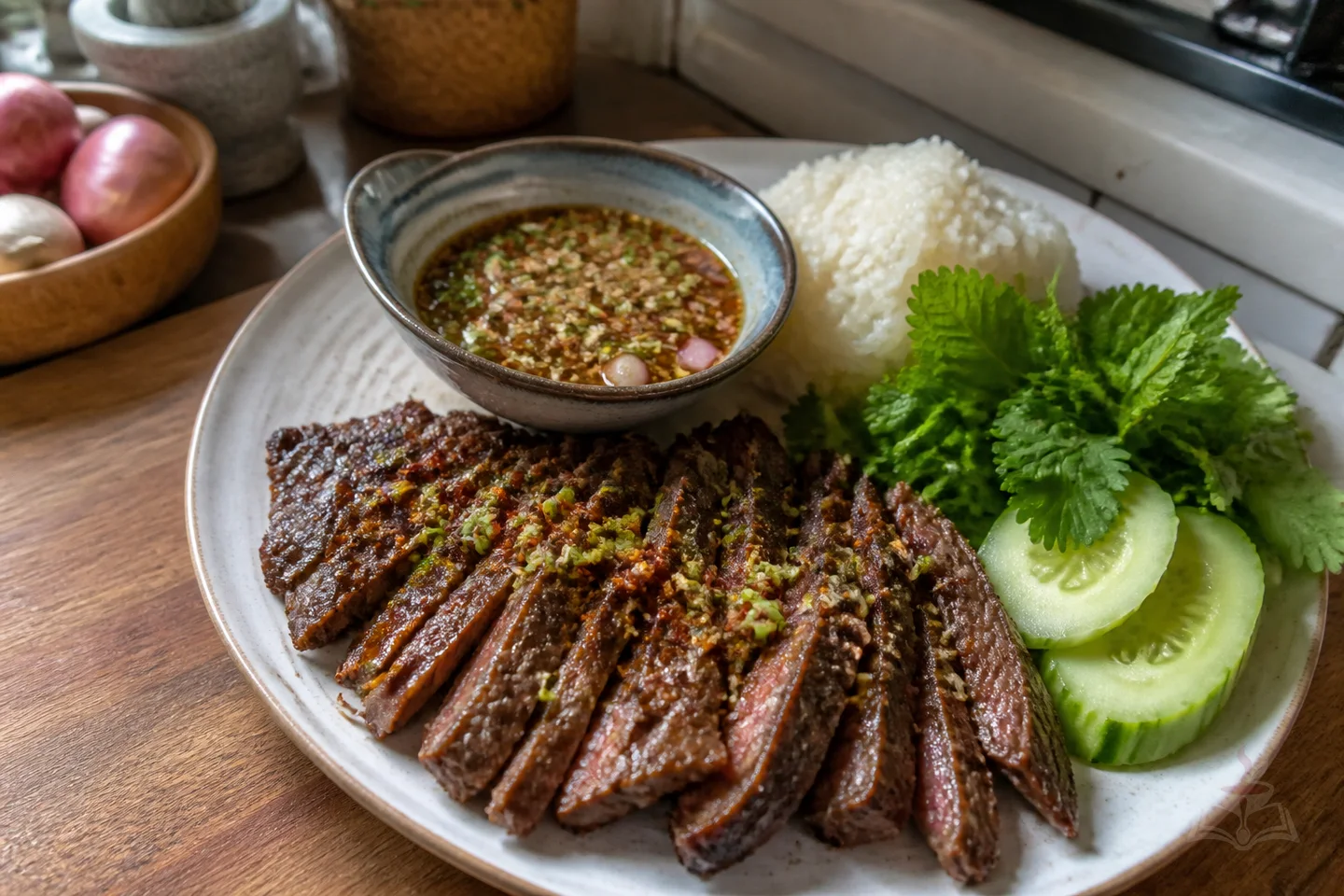
Charred marinated steak sliced with a spicy lime, fish sauce, chile, and roasted-rice dipping sauce.
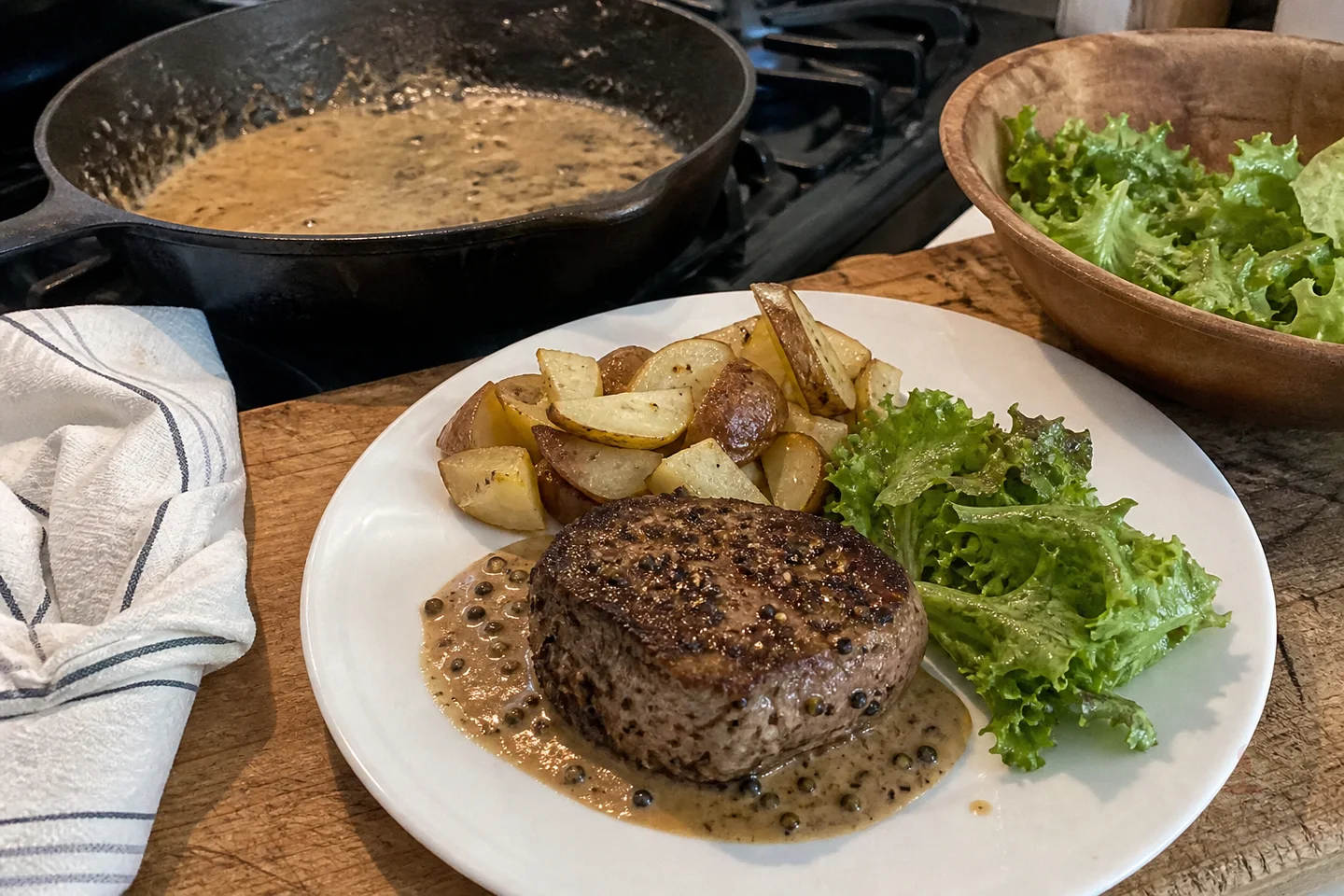
Pepper-crusted beef tenderloin with a cognac, stock, and cream pan sauce.